
Your Privacy Choices
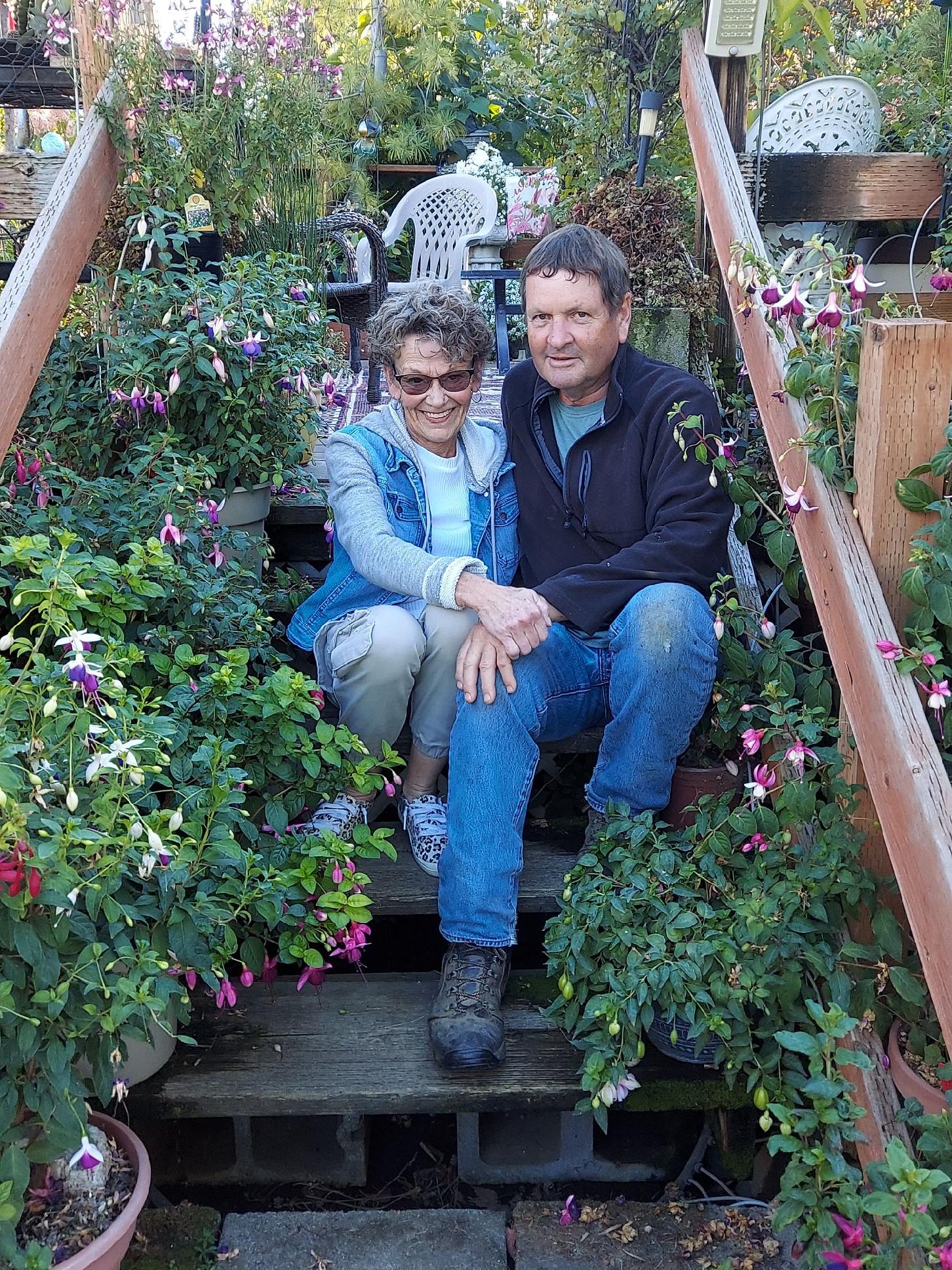
Debbie and I love plants. We started collecting fuchsias in 1991. The fuchsia collection and passion for plants evolved into a nursery where we started hybridizing and releasing new varieties. The nursery flourished until the economy collapsed in 2008. We were forced to close our operations in 2009. With our love of Eastern Oregon and understanding of gardening potential in the Walla Walla Valley, decided to re-start our lives in Milton-Freewater, Oregon and make it our new home.
My passion for fuchsias and desire to create new fuchsia varieties simmered for the next ten years. Between 2009 and 2010, Debbie and I learned that fuchsias could be grown through the hot summers and cold winters in Milton-Freewater even though we were repeatedly told that fuchsias could not be grown here.
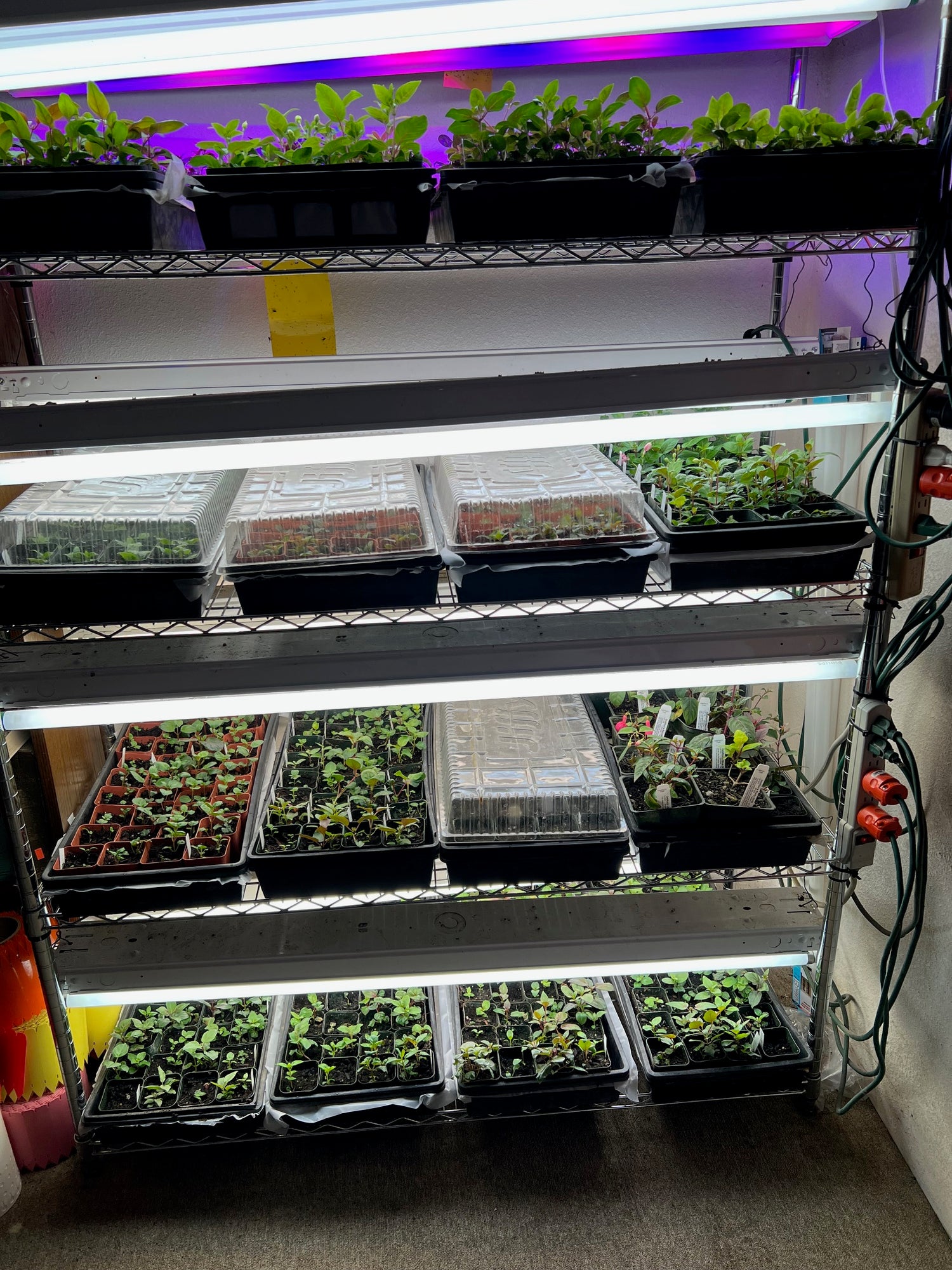
In the summer of 2009, the decision was made to erect a small greenhouse and work through the mechanics of hybridizing, growing seedlings, and testing new varieties.
We worked through the processes and settled on Fall hybridizing, growing seedlings on racks under florescent lights, transferring the well rooted plants to the greenhouse, and then moving them to a shade structure in the Spring and Summer for early evaluation.
Promising specimens are either potted up to be grow in containers for evaluation or planted in the test garden for hardiness evaluation.
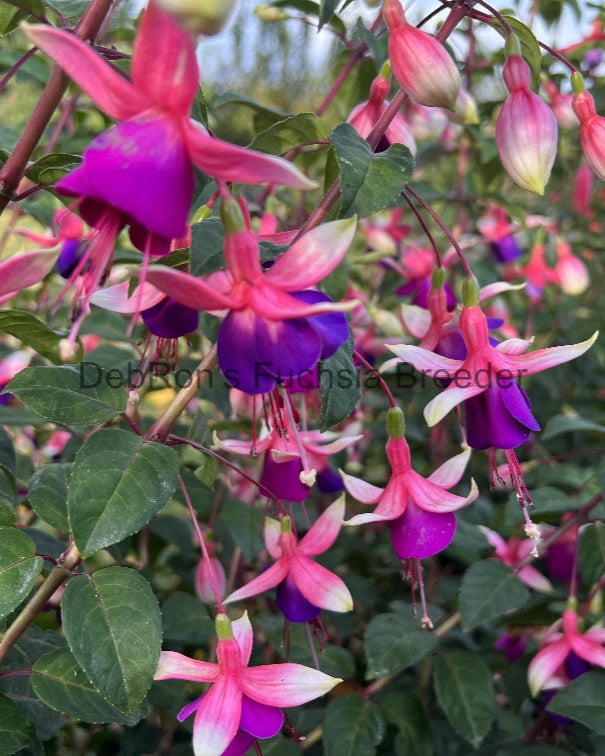
Fuchsias with the DebRon's name are created through a directed breeding program. The goal of the breeding program is to create new, interesting, tough, cold hardy, heat tolerant and reliable fuchsia varieties. Since 2020, directed emphasis to the breeding has been towards expanding the range of 'Hardy Fuchsia'. Generally, the pervasive thought in the gardening world is that USDA hardiness zone 8A is the colder end of the range where gardeners will be successful growing fuchsias in their landscape. Some hardiness testing has been done in colder zones, but most known successful varieties have red and purple, single blossoms. Current DebRon's breeding work is directed towards developing hardy fuchsias in blossom color schemes other than red and purple. Through the testing and evaluation at our Milton-Freewater test garden, all hardy releases will be proven hardy for USDA hardiness zone 7A and the potential for hardiness into USDA hardiness zone 6.
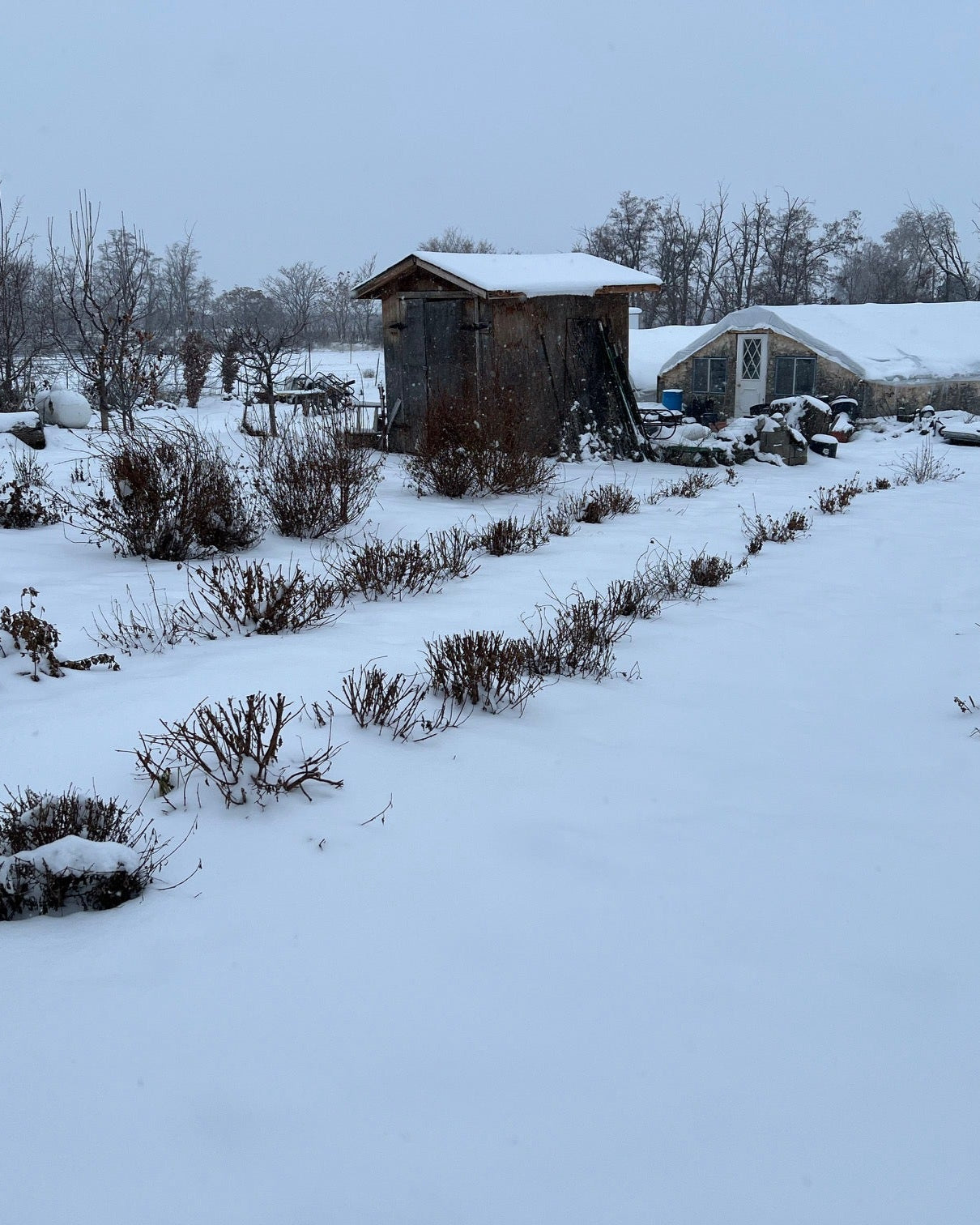
The Milton-Freewater test garden was established in 2020. Since then winter temperatures have dropped to at least 5° F, and were recorded at -10° in January 2024. The new fuchsias being considered for release as a hardy are evaluated growing in the ground for a minimum of three years. The evaluation covers not just the plants ability to survive the winter, but its ability to thrive through the summers where high temperatures average in the 90's and can regularly surpass 105° F.
In addition to landscape hardy fuchsias, the breeding work is producing new varieties suitable for use in containers and hanging baskets. It is hoped that all new varieties created will have a degree of increased insect and disease resistance as a bonus.